
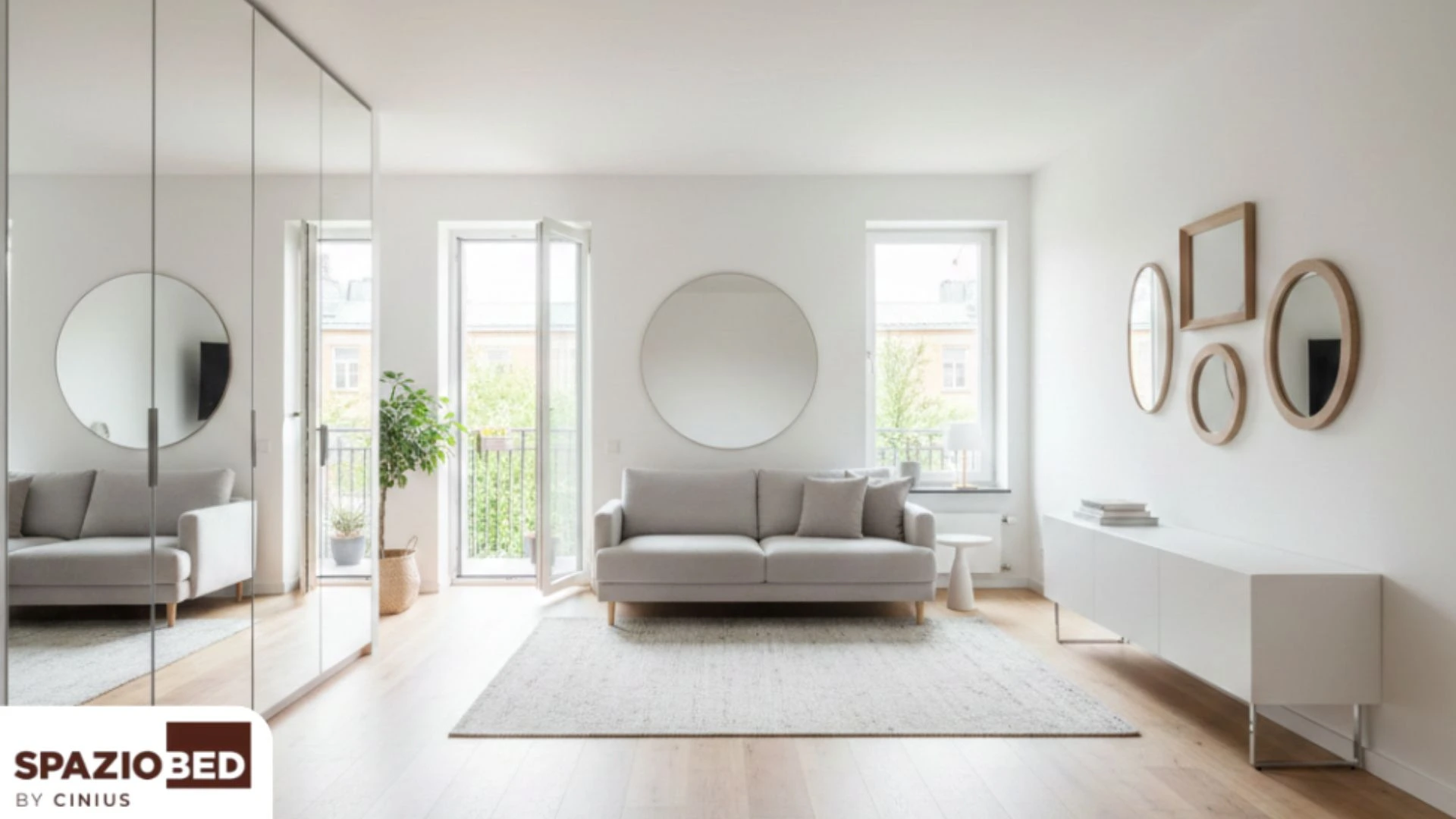
Mirrors in the living room are not only used to control our appearance-they become true allies in enlarging spaces, enhancing natural light and giving more depth to rooms.
Whether in tight studios, dark corners, compact living rooms or studio rooms, the strategic placement of mirrors can make the difference between a stuffy room and one that is more airy, bright and welcoming.
Mirrors on closet doors: functionality and design
One of the smartest ways to integrate mirrors into the living room is to place them directly on cabinet doors. This solution is perfect for tight spaces because it combines storage, functionality and visual expansion in a single piece of furniture.
Mirrored doors help to increase natural light, lighten the cabinet’s presence and create a dramatic effect, especially when combined with modern, linear and unobtrusive finishes.
Decorative mirrors: strategic spots for dark corners
Not all mirrors need to be large or integrated into cabinets. Even decorative mirrors can double the depth of a living room if placed correctly.
- In front of windows or French doors: they help capture natural light and distribute it to even the most hidden corners.
- Behind the sofa or an armchair: they create an elegant perspective effect and increase depth perception.
- On the side walls: these are useful for visually extending the room in width or length, especially in narrow living rooms.
In hybrid environments, such as those dedicated to Studio & Living, mirrors become even more useful because they help bring together different functions without weighing down the room.
Practical rules for doubling the depth
To really exploit the potential of mirrors, it is important not to place them haphazardly. The reflective surface should enhance what is around it, not amplify cluttered or too dark areas.
- Avoid walls that are too dark: a mirror reflecting a gloomy area is likely to make the room heavier.
- Play with shapes: horizontal rectangular mirrors lengthen the space in width, while vertical ones emphasize height.
- Choose light or absent frames-so the mirror almost seems to float in space, increasing the effect of depth.
- Integrate multiple small mirrors: a well-designed composition can create plays of light and perspective in even the most difficult corners.
Mirrors and functional furniture: the perfect combination
In rooms such as studio apartments, small studies or multifunctional living rooms, mirrors and smart furniture can work together to optimize space and light. The goal is not just to decorate, but to make the environment more livable.
- Cabinets with mirrored doors for living rooms, bedrooms or study areas.
- Bookcases with reflective inserts, useful for visually lightening equipped walls.
- Consoles and sideboards with glossy surfaces that amplify light without taking up too much space.
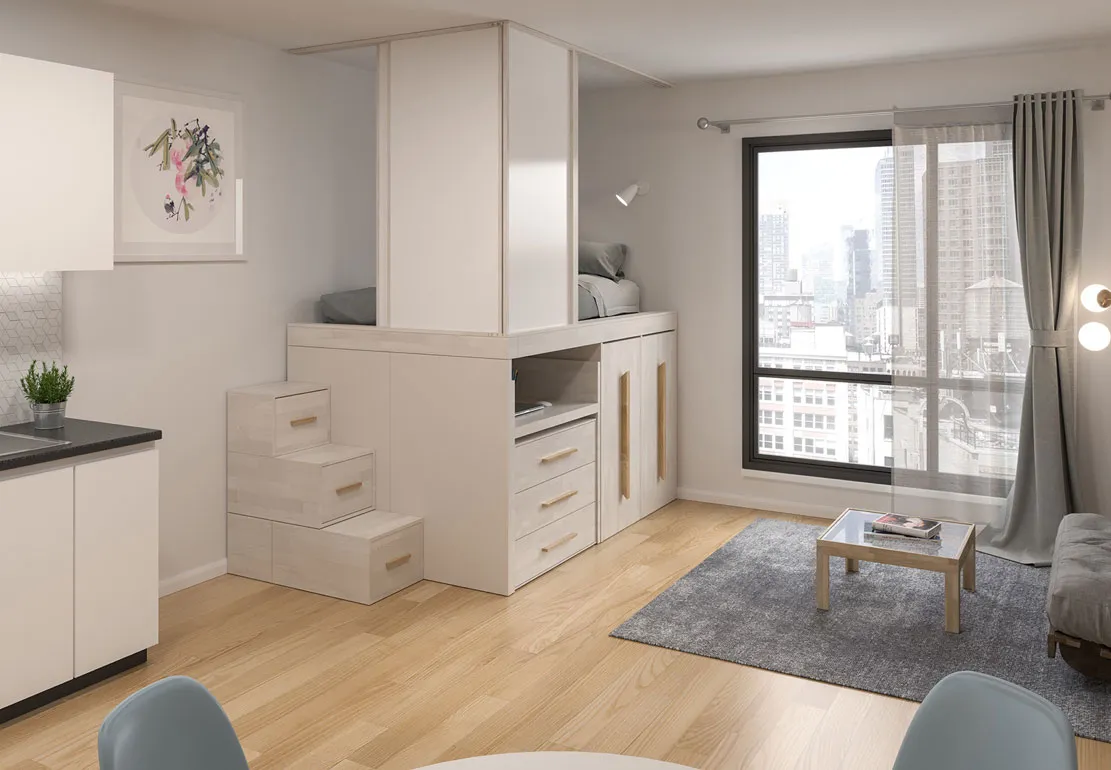
Solutions such as the raised study or raised living room allow more functions to be organized in the same room. In these cases, mirrors can be used to give more visual breath to the composition and make the space lighter.
Conclusion
Placing mirrors in the living room is not just an aesthetic choice: it is a real design strategy. A well-placed mirror increases light, depth, and the perception of space.
Whether you choose large mirrors on cabinet doors or decorative wall elements, every detail can help transform a compact room into a more welcoming, harmonious and functional living room.