
How to prevent dust from accumulating in a walk-in closet is one of the most common concerns when considering an open or semi-open design. The problem is simple: if clothes, shoes, and accessories are always exposed, dust tends to settle more easily on fabrics, shelves, and surfaces. That’s why the right question isn’t just “how to clean a walk-in closet,” but how to prevent dust from getting in easily. Storage bags, boxes, and regular cleaning help, but the real difference lies in the walk-in closet’s design: if it’s completely open, it will require more maintenance; if it’s well-sealed, it will protect the contents much better. In the case of Cinius and SpazioBed, the issue is addressed at its root with Japanese-style sliding doors, lightweight closures, solid wood tracks, and solutions designed to protect your wardrobe without turning the bedroom into a heavy or cluttered space.
Why Does Dust Build Up in the Walk-In Closet?
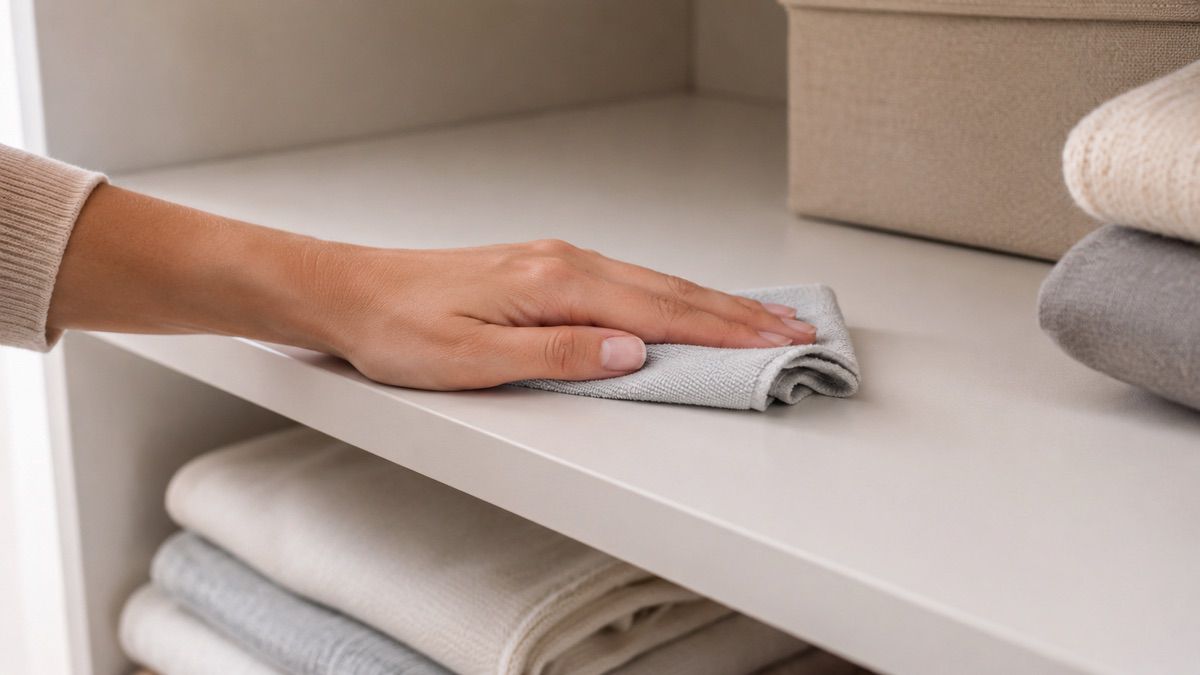
Dust gets into the walk-in closet because the air in the room is always moving. Every time you walk, open a window, make the bed, or move fabrics around, small particles can become airborne and settle on shelves and clothes. In an open walk-in closet, this phenomenon is more noticeable because there are no doors to act as a barrier. Hanging clothes remain visible and accessible, but they’re also more exposed. Sweaters, coats, long dresses, and out-of-season items tend to accumulate the most dust, especially if they’re rarely worn. Simple solutions are helpful: breathable storage bags for delicate items, closed boxes for accessories and linens, cleaning with a slightly damp microfiber cloth, and minimizing the number of items left out in the open. But these are merely countermeasures. The most effective solution remains to keep the walk-in closet securely closed, without sacrificing accessibility.
The best solution: Don’t leave the cabin completely open
An open walk-in closet may look beautiful in interior design photos, but in everyday life it requires a lot of organization and more cleaning. If the goal is to truly reduce dust, a closed walk-in closet or one screened by lightweight doors is preferable. The Cinius walk-in closet can be designed with Japanese-style sliding doors, shelves, hanging rods, dressers, shoe racks, and interior accessories. This way , the wardrobe remains accessible but isn’t left exposed as it would be in a completely open walk-in closet. The advantage is practical: when you need it, you open the closet and see everything; when you don’t, you close it and the room looks tidier. This also helps visually, because clothes and items aren’t constantly on display.
Japanese-style doors: dust protection without the bulky look of a traditional wardrobe
One of the key features of the Cinius and SpazioBed solutions is the Japanese-style sliding door system. The closet can be completely closed off, but the effect is not that of a large traditional closet. The doors create a light, continuous, and neat wall. This is especially important in small bedrooms: a heavy door can make the room feel more cluttered, while a Japanese-style sliding wall maintains a cleaner and more harmonious look. When it comes to dust, the enclosure is the real advantage. The doors protect garments from direct exposure, and when the system is closed at the top and bottom, they reduce the amount of dust that gets inside. In this way, the walk-in closet retains the benefits of accessibility while functioning much more like a protected closet.
Solid-wood tracks and lightweight doors: fewer problems over time
Many traditional sliding wardrobes use wheels, metal tracks, hardware, and mechanisms that can wear out over time or become difficult to adjust. The Cinius and SpazioBed Japanese-style doors , on the other hand , operate on grooved solid wood guides, without complex gears. This simple design also helps with dust management. Fewer mechanisms mean fewer hard-to-clean areas and fewer delicate components where dirt and debris can accumulate. The doors are also lightweight and feature a snap-fit design. Even very tall doors can be lifted and repositioned with ease, making it simpler to clean the shower enclosure periodically and providing full access to the interior.
Without a backing: the wall remains more breathable
Another important feature of the Cinius and SpazioBed solutions is the absence of a back panel. In many traditional closets, the back panel completely seals the unit against the wall. In some environments, this can reduce the wall’s ability to breathe and lead to moisture buildup. A walk-in closet without a back panel, on the other hand, allows the wall to remain more open. This does not eliminate the need to properly ventilate the room, but it helps avoid the “sealed-off wall” effect typical of some traditional closets. From a practical standpoint, the walk-in closet is protected at the front by the doors, but at the back it isn’t suffocated by a useless panel. It’s a solution consistent with a more natural, lightweight design that’s also well-suited to compact bedrooms.
SpazioBed: a closet or walk-in closet under the bed—but enclosed and secure
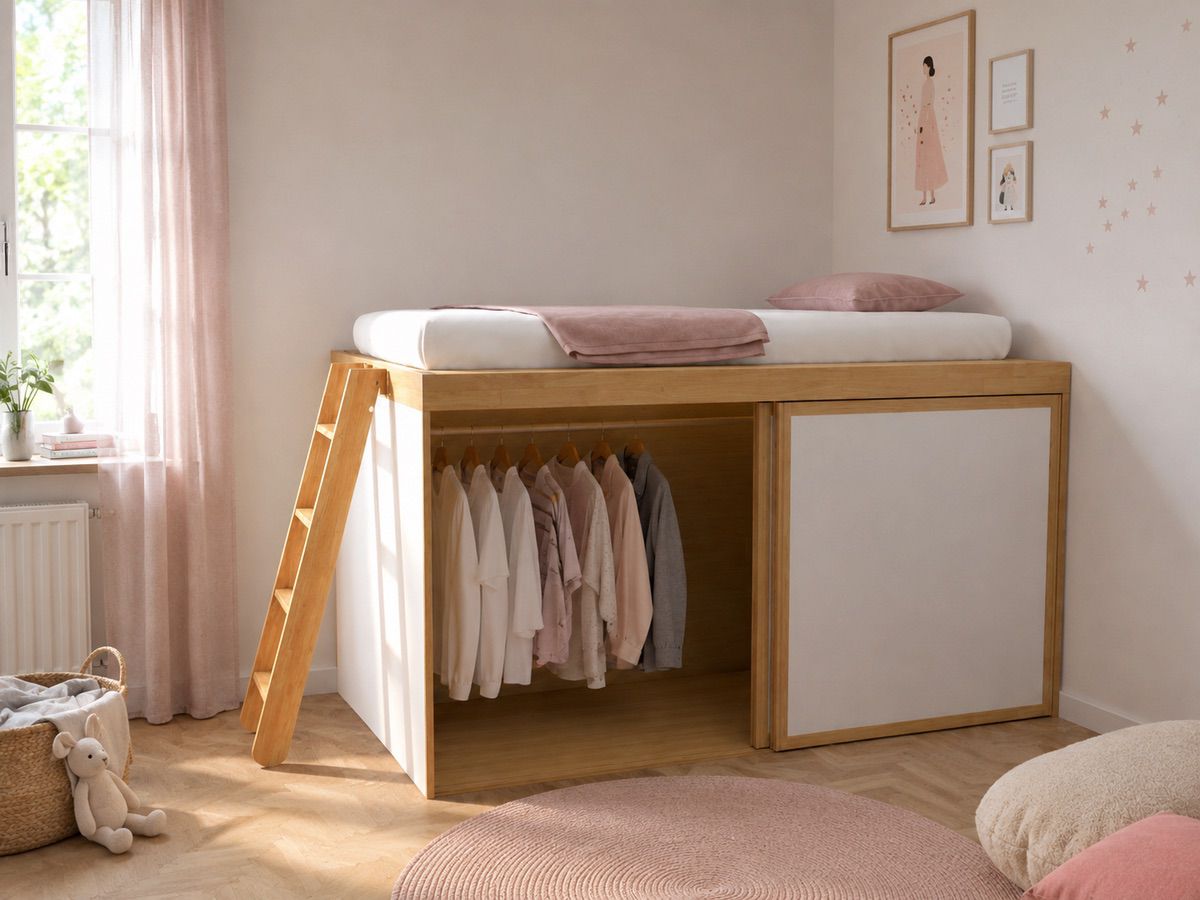
In SpazioBed solutions, the closet or wardrobe can be built under the loft bed. The goal here is not only to save space but also to properly protect the items stored beneath the structure. Bedrooms with under-bed storage allow you to close off the storage area with sliding doors, creating a tidy wardrobe space that is less exposed than an open walk-in closet. The lower section can accommodate hanging rods, shelves, rolling carts, or internal modules, depending on the design. The bed base should also be considered: slats and tatami mats are designed to support the sleeping area and allow it to “breathe,” not to create a completely sealed unit. For this reason, dust protection is primarily achieved through side and front closures, which separate the contents from the rest of the room.
What to Do If You Already Have an Open Walk-In Closet
If the walk-in closet is already open, you can still minimize the effects of dust. Less frequently worn items should be protected with breathable storage bags; sweaters, bags, and accessories can be placed in boxes with lids; shoes and small items should have their own dedicated containers. When cleaning, it’s best to avoid tools that stir up dust without trapping it. A slightly damp microfiber cloth is most effective for shelves, ledges, and surfaces. Vacuuming the floor around the walk-in closet regularly also helps limit dust buildup on clothes. In some situations, an air purifier with a filter appropriate for the room’s size may be helpful. It does not replace cleaning or remove settled dust, but it can help reduce airborne particles.
In short, dust in a walk-in closet can be reduced through good habits, storage containers, and regular cleaning. But the most effective solution is to prevent the problem in the first place with a walk-in closet designed to be closed off and protected. Cinius and SpazioBed Japanese-style doors allow you to enclose the closet without making the room feel cluttered. The solid wood tracks, the absence of complex mechanisms, the lightweight doors, and the top-and-bottom locking system make the system practical and durable. Those considering this project can also explore the benefits of a walk-in closet and the topic of walk-in closet costs. For children’s bedrooms, on the other hand, children’s bedrooms with walk-in closets follow the same principle: better organization, greater protection, and a tidier room every day.