
When discussing the drawbacks of a walk-in closet, the same issues are often mentioned: dust on clothes, the need to keep everything organized, the space required, higher costs compared to a traditional closet, and difficulties in managing it if the walk-in closet isn’t well-designed. These drawbacks do exist, but they aren’t inevitable. They depend heavily on the type of walk-in closet, the door system, the materials, the interior organization, and how it’s integrated into the room. An open, makeshift, or poorly protected walk-in closet can indeed create problems; a custom-designed walk-in closet, on the other hand, can turn many limitations into advantages.
This is precisely where two different yet related approaches come into play: the Cinius walk-in closet, designed as a custom system with sliding doors and customizable interior organization, and the SpazioBed solutions, where the closet or walk-in closet is integrated beneath the loft bed, saving space rather than taking it up.
Problem 1: An open walk-in closet collects dust
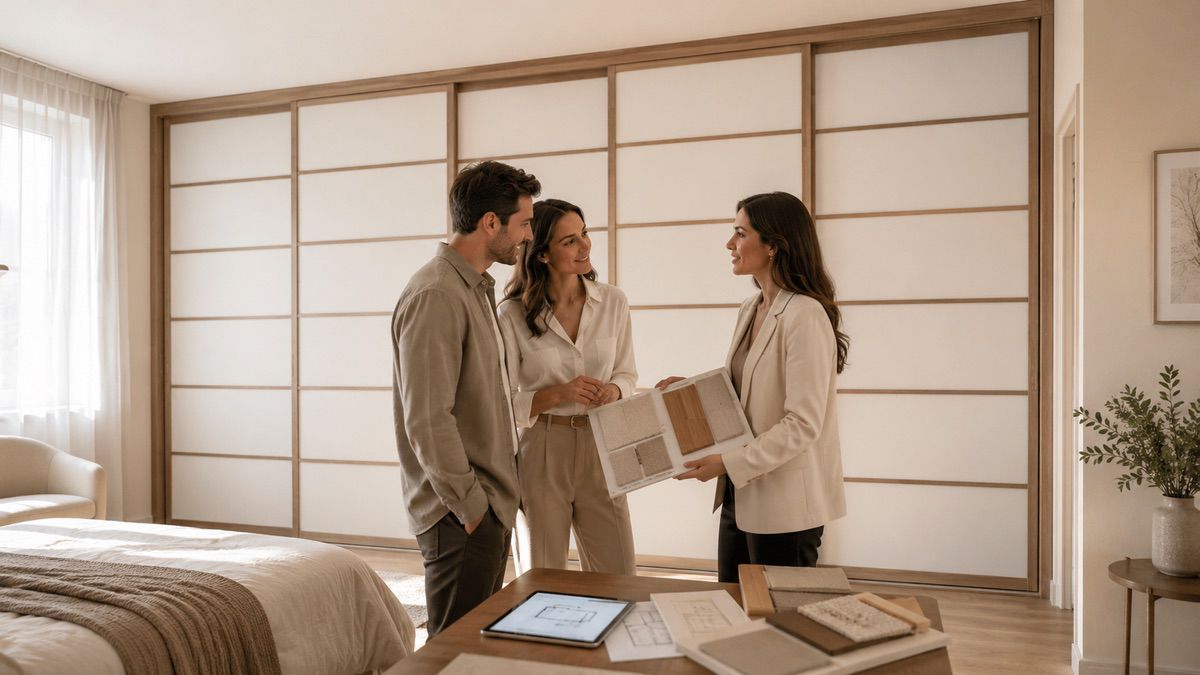
One of the most commonly cited drawbacks of a walk-in closet is dust. If the closet remains completely open, clothes, shoes, bags, and linens are more exposed than they would be in a closed closet. This can become a nuisance, especially in heavily used bedrooms, city homes, or spaces where you want to keep everything better protected. The solution isn’t to give up on the walk-in closet, but to design it with a proper closure. Shoji or Fusuma sliding doors allow you to close off the wall in a light and elegant way, without the bulk of hinged doors. Visually, the walk-in closet can appear almost like a continuous wall, rather than a traditional closet.
With the Cinius and SpazioBed solutions, the doors can be designed to protect the contents from above and below as well, significantly reducing the amount of dust that gets in. This is a key point: a walk-in closet doesn’t have to be open and vulnerable. It can be accessible, organized, and protected all at the same time.
Flaw 2: If it isn’t organized, it creates chaos
Another common issue with walk-in closets is visual order. When everything is in plain sight, it doesn’t take much for the room to look cluttered: clothes hung haphazardly, mismatched boxes, shoes out of place, and overflowing shelves. In an open walk-in closet, clutter can’t be hidden. Here, too, the solution lies in the design. A custom walk-in closet lets you decide where to place hangers, shelves, dressers, shoe racks, and accessories. Each category has its own space, making it easier to keep things organized. Sliding doors help even more: when needed, the closet closes and its contents disappear from view. This is particularly useful in small bedrooms, where visual clutter makes the space feel even more cramped. To learn more about this topic, you can also read our guide on how to furnish a small bedroom.
Drawback 3: A traditional walk-in closet takes up space
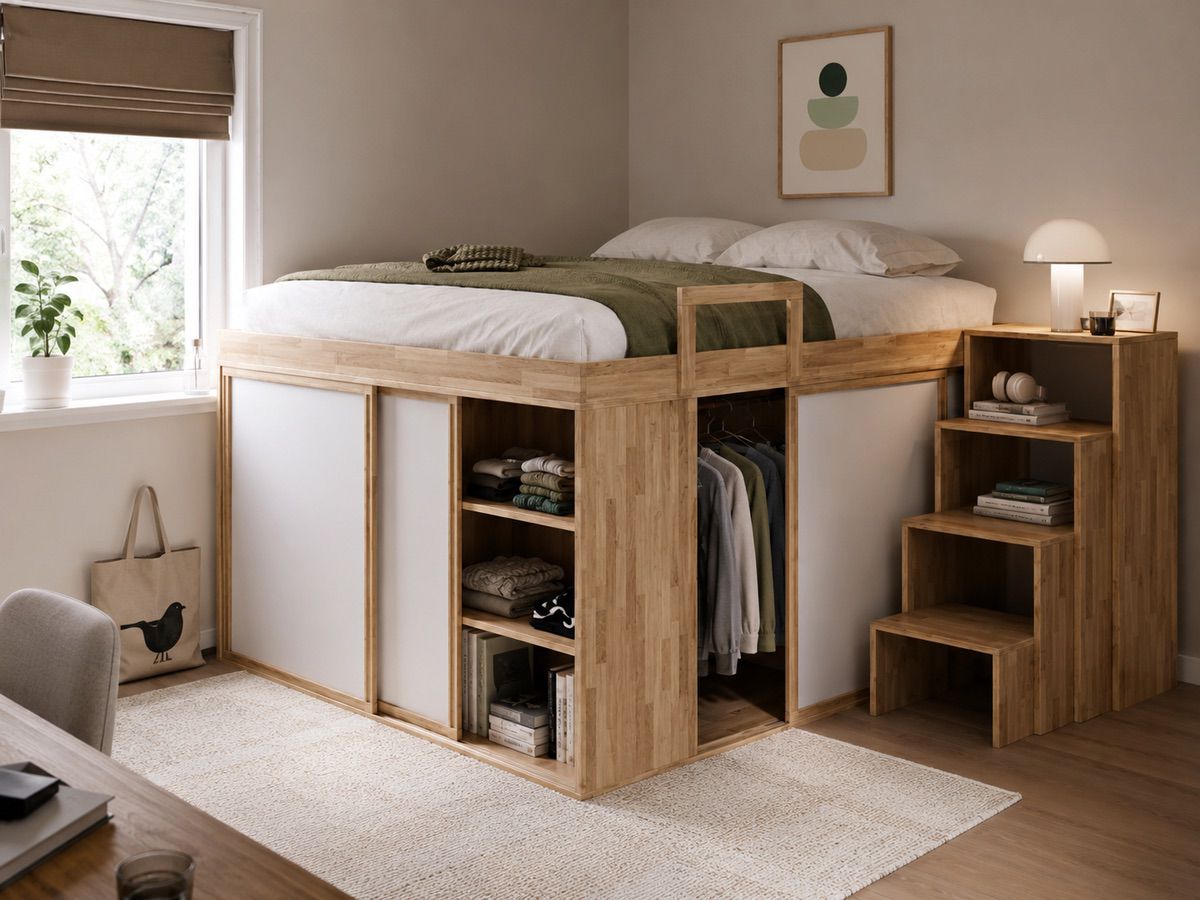
The classic walk-in closet is often imagined as a room within a room: a dedicated, walk-in space separate from the sleeping area. It’s a very attractive solution, but not always feasible. In a small bedroom, creating a traditional walk-in closet can take away space from the bed, walkways, or other furniture. Here, SpazioBed solves the problem with a different approach: instead of adding a walk-in closet to the room, it uses the space under a loft bed. Rooms with under-bed closets allow you to transform the space beneath the bed into a wardrobe area, without taking up an entire wall with a traditional closet. This is the real advantage of a walk-in closet under the bed: it doesn’t require a larger room, but makes better use of the existing one. In a space-saving master bedroom, this difference can completely transform the livability of the space.
Flaw 4: Doors and mechanisms can wear out
Many traditional closing systems rely on hardware, hinges, metal tracks, wheels, mechanisms, and components that can wear out, become misaligned, or start making noise over time. In a walk-in closet used every day, this is an important consideration. The Japanese-style sliding door system takes a different approach. The doors slide along grooved solid wood tracks, without complex mechanisms, gears, or delicate parts subject to constant stress. This simplicity of construction is an advantage: fewer mechanical elements mean fewer potential points of failure over time. Furthermore, the doors are lightweight and feature a snap-fit design. Even very tall doors can be lifted and repositioned with relative ease, making cleaning, maintenance, and access to the interior simpler. For those seeking a durable solution, this is one of the most appealing features compared to many traditional door systems.
Drawback 5: The backing may retain moisture
Another often-overlooked issue concerns the back panel. In some traditional closets, the back panel completely seals off the wall. While this may seem like a convenient finish, under certain conditions it can reduce the wall’s ability to breathe and promote moisture buildup, especially in poorly ventilated areas or against cold walls. The Cinius and SpazioBed solutions can be designed without a back panel, allowing the wall to breathe freely. This is a significant advantage in walk-in closets and under-bed closets, as it allows you to make the most of the wall without unnecessarily sealing it off. Of course, each room must be evaluated based on its actual conditions: exposure, ventilation, temperature, and humidity. But from a design perspective, the absence of a back panel can be a real advantage over more enclosed and less breathable solutions.
Drawback 6: A walk-in closet can cost more than a regular closet
A custom walk-in closet can cost more than a standard closet. This is especially true when it includes sliding doors, shelves, dressers, shoe racks, clothing racks, and custom accessories. The key, however, is to understand what you’re buying. An inexpensive closet provides storage but often fails to solve problems related to space, walkways, accessibility, and organization. A well-designed walk-in closet, on the other hand, can replace multiple pieces of furniture: a wardrobe, a dresser, shoe racks, storage units, and, in some cases, even part of a wall unit.
In the case of SpazioBed, the value is even more evident: the cabin or closet is not an additional piece of furniture, but part of the bed’s structure. The same space is used for both sleeping and storage. For this reason, the price should be evaluated not only as the cost of the furniture, but also as a way to maximize usable space.
Drawback 7: In children’s bedrooms, it may seem like too bulky a solution
In children’s bedrooms, a traditional walk-in closet can be difficult to fit in. If the room is small, a large freestanding closet risks taking away space from the bed, desk, play area, and walkways. Children’s bedrooms with walk-in closets solve this problem using the same principle as in adult bedrooms: the bed is raised, creating a wardrobe or storage area underneath. This way, the walk-in closet doesn’t take up space in the room—it actually frees it up. This approach is especially useful when the room is shared or when you need to store clothes, toys, books, and personal items within a few square meters. In these cases, it may also be helpful to consider how to maximize space in a child’s bedroom without adding more standalone furniture.
Flaw 8: A precise design is needed
A walk-in closet isn’t something you should choose “on a whim.” If it’s poorly designed, it can be inconvenient: shelves that are too deep, hard-to-reach hangers, poor lighting, cramped walkways, or doors that are difficult to use. With a custom design, these problems are greatly reduced. The doors are crafted to the millimeter, the interiors are organized according to your actual habits, and the layout takes into account walls, height, depth, and walkways. This is particularly important in small bedrooms. Before installing a walk-in closet, it’s important to figure out how to arrange the furniture in a small bedroom, because the placement of the bed, closet, and storage units directly affects your daily comfort. This is where our free estimate service, with design included in the price.
In conclusion, the drawbacks of walk-in closets are most evident when the design is open, poorly protected, not tailored to the actual dimensions, or haphazardly installed in a room that’s too small. Dust, clutter, space requirements, costs, and wear and tear on the mechanisms are real problems, but they can be addressed with the right design choices. The Cinius walk-in closet improves on these aspects with Shoji sliding doors, custom-made elements, solid wood tracks, no back panel, shelves, clothing rods, shoe racks, and customizable accessories. The SpazioBed solution adds another advantage: integrating the walk-in closet or wardrobe under a loft bed, making use of space that would otherwise remain underutilized.
That’s why the question shouldn’t just be what the drawbacks of a walk-in closet are, but what type of walk-in closet to choose. A well-designed walk-in closet doesn’t create any more problems: it helps protect, organize, and free up space, transforming the bedroom into a more orderly, functional, and livable space.