
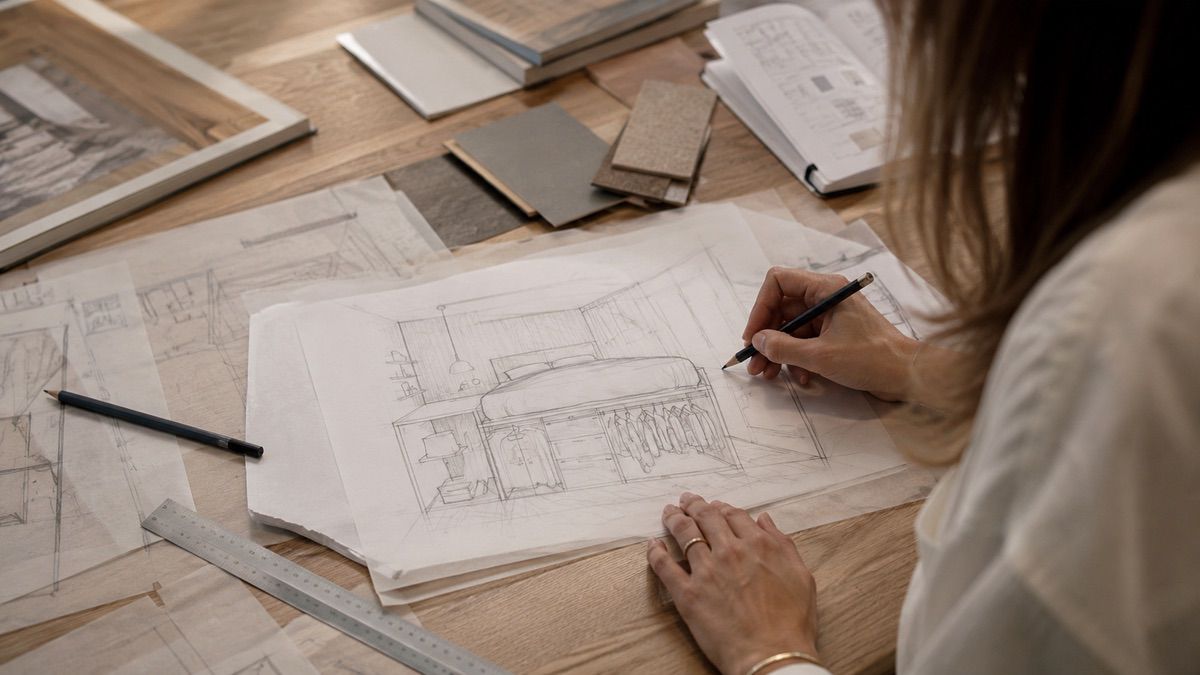
The size of a double bedroom is one of the most important factors to consider when designing a room for two people. The question seems simple: how many square meters are needed? In reality, in addition to the minimum floor area required by regulations, you must also consider the shape of the room, the space needed to move around the bed, the space for the closet, and the amount of storage needed.
In Italy, the most commonly cited standard for bedrooms is the Ministerial Decree of July 5, 1975. For a bedroom intended for two people, the minimum area specified is 14 square meters. This figure represents an important regulatory threshold, but it does not automatically guarantee that the room will be comfortable, tidy, and livable.
A 14-square-meter double bedroom can work well if it is well-proportioned and thoughtfully furnished. However, it can be challenging if it is narrow, long, irregularly shaped, or if it needs to accommodate a bed, a closet, a dresser, nightstands, and other separate pieces of furniture.
Double Room Dimensions: What the Regulations Say
For a bedroom intended for two people, the minimum floor area generally specified by national regulations is 14 square meters. In addition to this requirement, there are other specifications, such as a standard ceiling height of 2.70 meters and the presence of a window that opens.
The window is not a minor detail: a bedroom must provide natural light and adequate ventilation. For this reason, when evaluating a room, one should not focus solely on the floor area, but also consider the relationship with the windows, the ventilation, and the overall quality of the space.
It is always a good idea to check your municipality’s building code as well, especially in the case of renovations, changes in intended use, attic conversions, or interior modifications. The 14-square-meter rule is an essential guideline, but the specific conditions of the property may require more precise technical assessments.
Is 14 square meters really enough for a master bedroom?
From a regulatory standpoint, 14 square meters is the minimum size for a master bedroom. From a practical standpoint, however, it all depends on how those square meters are laid out.
A nearly square bedroom measuring 14 square meters can allow for a more balanced layout: the bed in the center, walkways on either side, a closet along one wall, and nightstands. A long, narrow bedroom, on the other hand, may have the same floor area but be more challenging to furnish, because the double bed takes up most of the available width.
That’s why, when discussing the size of a master bedroom, you shouldn’t just focus on the number of square meters. You need to consider whether there’s enough space to move around comfortably, whether the closet opens properly, whether the drawers are usable, and whether the room still feels tidy.
The double bed is the real space-eater
In a master bedroom, the bed is almost always the dominant feature. A standard bed takes up a significant amount of space and dictates everything else: the placement of the nightstands, the space to walk around the bed, access to the closet, the space at the foot of the bed, and the possibility of adding other storage units.
When a room is small, there’s a risk that the bed will leave little room for anything else. As a result, you end up adding dressers, closets, shelves, and storage units wherever there’s space, resulting in a cluttered, cramped bedroom.
To avoid this problem, it’s helpful to think of the bed not just as a place to sleep, but as part of a space-saving design. SpazioBed double bedrooms are based on this very principle: transforming the space occupied by the bed into a resource for storing, organizing, and freeing up space.
Small double bedroom: it’s best to minimize freestanding furniture
In a small master bedroom, the challenge isn’t just fitting the bed inside. The real goal is to prevent the room from becoming cluttered with too many freestanding pieces of furniture. A bed, wardrobe, nightstands, dresser, small chest of drawers, and bookcase can take up every wall and make the space feel visually overwhelming.
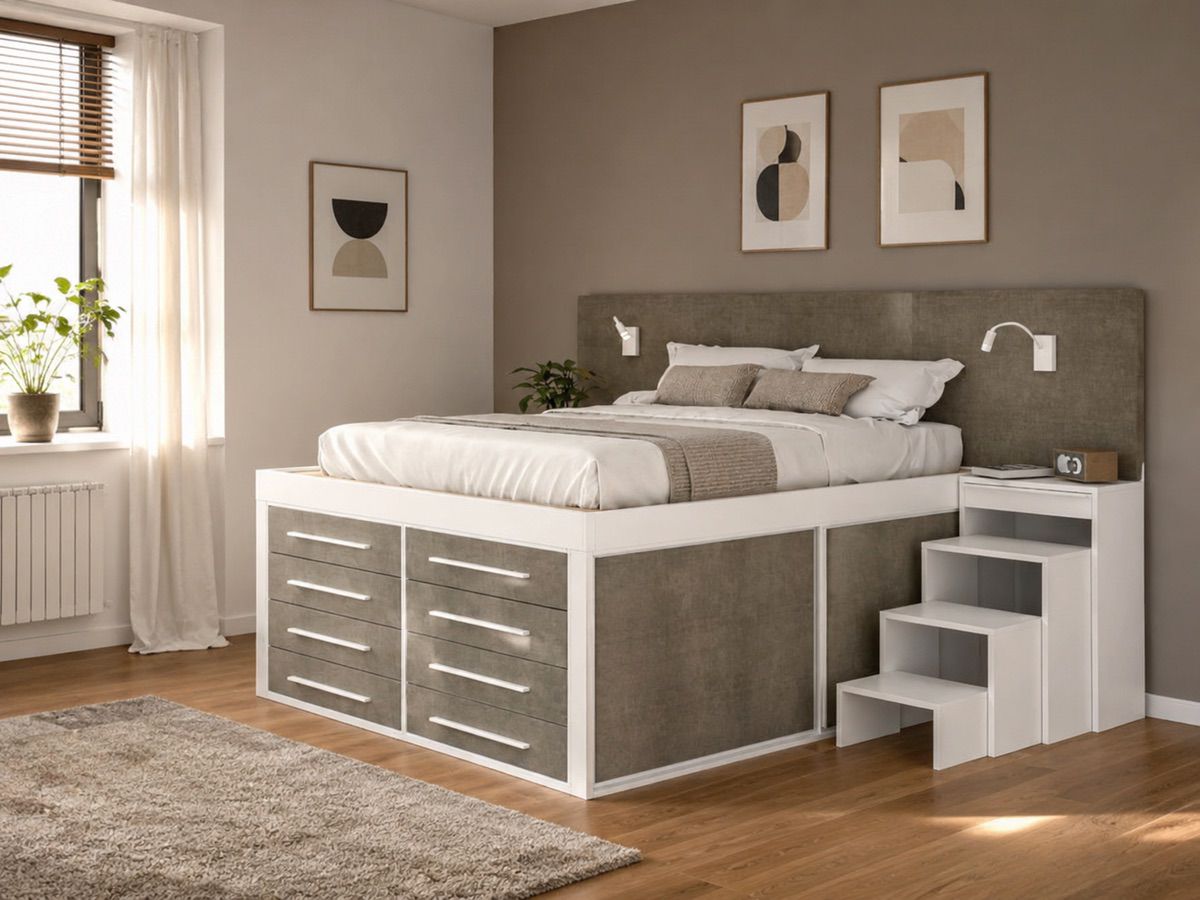
A more effective strategy is to integrate multiple functions into the same piece of furniture. For example, beds with drawers allow you to use the space under the bed for linens, seasonal clothing, clothes, or items that would normally require a separate dresser.
This approach helps keep the room’s perimeter more open. Fewer separate pieces of furniture means less clutter, less visual clutter, and a room that’s easier to use every day.
A traditional closet or under-bed storage?
A closet is often the most challenging piece of furniture to fit into a small master bedroom. It requires depth, a suitable wall, and enough space in front of it to open doors or drawers. If the room is just barely 14 square meters, a traditional closet can significantly restrict freedom of movement.
In these cases, a solution that includes storage space under the bed may be more efficient. Rooms with under-bed closets raise the bed off the floor and use the space below as a closet area, reducing the need to take up an entire wall with a separate closet.
Another option is bedrooms with storage drawers, where pull-out units allow you to organize clothes, linens, and personal items under the bed frame. These drawers require space to open, but when designed properly, they make use of an area that would otherwise remain unused.
When you also need space for books, personal items, and work
Many master bedrooms are used for more than just sleeping. In small apartments, vacation homes, or city apartments, the bedroom can also serve as a storage area, a reading nook, or a space to keep books, documents, and personal items.
In these cases, a simple bedroom with a bed and a closet may not be enough. Bedrooms with built-in bookshelves allow you to incorporate storage space and vertical shelving without adding deep floor-standing furniture.
A well-designed bookshelf can make a room feel lighter rather than heavier. It can make use of walls that are normally underutilized, complement the headboard, or blend in with the bed’s structure, helping to keep the rest of the room tidier.
Dimensions of double rooms and studio apartments
The issue of double-bed size becomes even more delicate in studio apartments and single-room units. In these cases, the double bed doesn’t just occupy a single room—it influences the entire living space. If the bed is always in the center of the room, it can reduce the sense of order and limit the day-to-day use of the home.
Studio apartments are designed precisely to meet this need: to create a double bedroom area integrated with storage, closets, rolling units, or space-saving modules. The goal is to make the bed part of a system, not an element that dominates the entire room.
In studio apartments, the layout is even more important than the size of the single room, because the sleeping area, storage, and living space must all coexist within the same space.
How to Tell If a Master Bedroom Is Truly Livable
A master bedroom is livable when the bed doesn’t take up all the space. You need to be able to enter the room, move around, open storage units, make the bed, and comfortably use the main pathways.
There are some signs that the room is too cluttered: a closet that’s hard to open, a narrow passageway at the foot of the bed, nightstands that are too cramped, drawers that bump into other furniture, and a lack of space for linens and seasonal clothing.
In these cases, before assuming that the room is too small, it’s worth considering whether the problem might actually be the layout of the furniture. A compact master bedroom can become much more functional if storage is integrated into the bed frame and if the design makes use of vertical space rather than just taking up floor space.
Double Bedroom Dimensions: The Minimum Isn’t Enough Without a Plan
In summary, the minimum size for a master bedroom is generally 14 square meters, with a standard ceiling height of 2.70 meters and a window that opens. This is the regulatory starting point, but it is not the only criterion for determining whether a bedroom truly works.
A 14-square-meter room can be comfortable if it is well-proportioned and thoughtfully furnished. However, it can become cramped if it is filled with standard furniture without taking into account walkways, storage, and the room’s shape.
It’s the design that makes the difference. With loft beds, built-in drawers, bookshelves, pull-out carts, and under-bed storage, a small master bedroom can become more organized and livable. That’s why, when evaluating the size of a master bedroom, it’s worth asking not only how many square meters it has, but also how those square meters can be used in the smartest way possible.